Search By Year of Publication of Review
2024丨2023丨2022丨2021丨2020丨2019
Volume 11 • Issue 2 • November 2024
- Shengyu Fan. The Translator’s Mirror for the Romantic: Cao Xueqin’s Dream and David Hawkes’ Stone. Routledge Studies in Chinese Translation. New York: Routledge, 2022. Reviewed by Qiang (Jason) Li
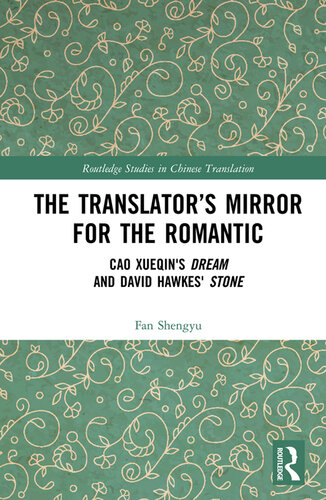
The Translator’s Mirror for the Romantic: Cao Xueqin’s Dream and David Hawkes’ Stone is a book that uses precious primary sources to decipher a master translator’s art in Stone, a brilliant English translation of the most famous Chinese classic novel Dream.
This book demonstrates a bilingual close reading which sheds light on both the original and its translation. By dividing the process of translation into reading, writing, and revising, and involving the various aspects of Sinological research, textual criticism, recreation, and literary allusions, this book ventures to emphasise the idea of translation as a dialogue between the original and the translated text, between the translator and his former self, and a learning process both for the translator and the reader of his translation.
Any student of Chinese language and literature, or Chinese–English translation, will benefit from this book; for students and scholars who want to study David Hawkes and his Stone, this book is an indispensable aid. Readers will be interested to see how a non-theoretical analysis could be used to evaluate this translation, for it makes an extremely important and useful contribution to this subject.
- Zong-qi Cai 蔡宗齐. Yufa yu shijing—hanshi yishu zhi poxi 语法与诗境——汉诗艺术之破析 (Grammar and Poetic Vision: Deciphering the Art of Classical Chinese Poetry). Beijing: Zhonghua shuju, 2021. Reviewed by Xinda Lian
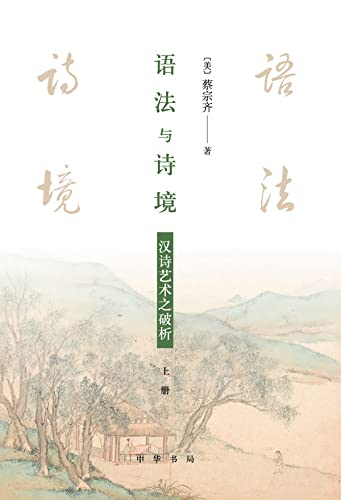
主书名“语法与诗境”概括了本书的中心内容。语法这里特指使用诗歌语言的方法,主要涵盖韵律、句法、结构三大方面;诗境,则是这三者互动结合而产生的审美体验,其中很上乘者被认为可呈现主、客观世界之实相,称为“意境”、“意象”、“境界”。全书分十二章,共时分析和历时比较相互交错,相得益彰,力图将每种诗体自身发展的内在脉络以及不同诗体之间相互影响的复杂路径一一梳理清楚,从而揭示为何各种诗体在其不同的发展时期能焕发出迥然不同的诗境,即独特的时空或超时空之审美经验。
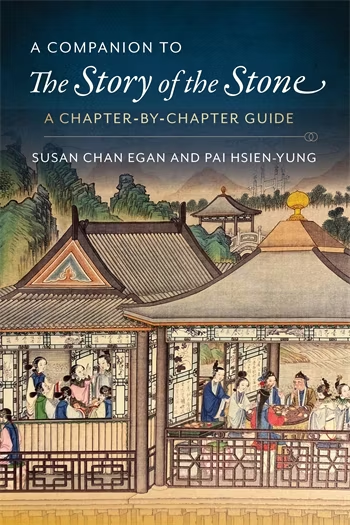
- Susan Chan Egan and Pai Hsien-yung. A Companion to The Story of the Stone: A Chapter-by-Chapter Guide. New York: Columbia University Press, 2021. Reviewed by Ann Waltner
The Story of the Stone (also known as Dream of the Red Chamber) is widely held to be the greatest work of Chinese literature, beloved by readers ever since it was first published in 1791. The story revolves around the young scion of a mighty clan who, instead of studying for the civil service examinations, frolics with his maidservants and girl cousins. The narrative is cast within a mythic framework in which the protagonist’s rebellion against Confucian strictures is guided by a Buddhist monk and a Taoist priest. Embedded in the novel is a biting critique of imperial China’s political and social system.
A Companion to The Story of the Stone: A Chapter-by-Chapter Guide is a straightforward guide to a complex classic that was written at a time when readers had plenty of leisure to sort through the hundreds of characters and half a dozen subplots that weave in and out of the book’s 120 chapters. Each chapter of the companion summarizes and comments on each chapter of the novel. The companion provides English-speaking readers—whether they are simply dipping into this novel or intent on a deep analysis of this masterpiece—with the cultural context to enjoy the story and understand its world.
The book is keyed to David Hawkes and John Minford’s English translation of The Story of the Stone and includes an index that gives the original Chinese names and terms.
- Haun Saussy. The Making of Barbarians: Chinese Literature and Multilingual Asia. Princeton, NJ: Princeton University Press, 2022. Reviewed by Yue Zhang 張月 and Lingshuang Lai 賴伶雙
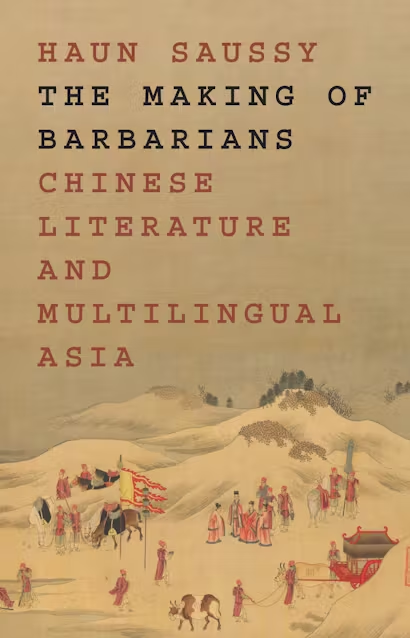
Debates on the canon, multiculturalism, and world literature often take Eurocentrism as the target of their critique. But literature is a universe with many centers, and one of them is China. The Making of Barbarians offers an account of world literature in which China, as center, produces its own margins. Here Sinologist and comparatist Haun Saussy investigates the meanings of literary translation, adaptation, and appropriation on the boundaries of China long before it came into sustained contact with the West.
When scholars talk about comparative literature in Asia, they tend to focus on translation between European languages and Chinese, Korean, and Japanese, as practiced since about 1900. In contrast, Saussy focuses on the period before 1850, when the translation of foreign works into Chinese was rare because Chinese literary tradition overshadowed those around it.
The Making of Barbarians looks closely at literary works that were translated into Chinese from foreign languages or resulted from contact with alien peoples. The book explores why translation was such an undervalued practice in premodern China, and how this vast and prestigious culture dealt with those outside it before a new group of foreigners—Europeans—appeared on the horizon.
Volume 10 • Issue 2 • November 2023
- Yue Zhang. Lore and Verse: Poems on History in Early Medieval China. Albany: State University of New York Press, 2022. Reviewed by Nanxiu Qian
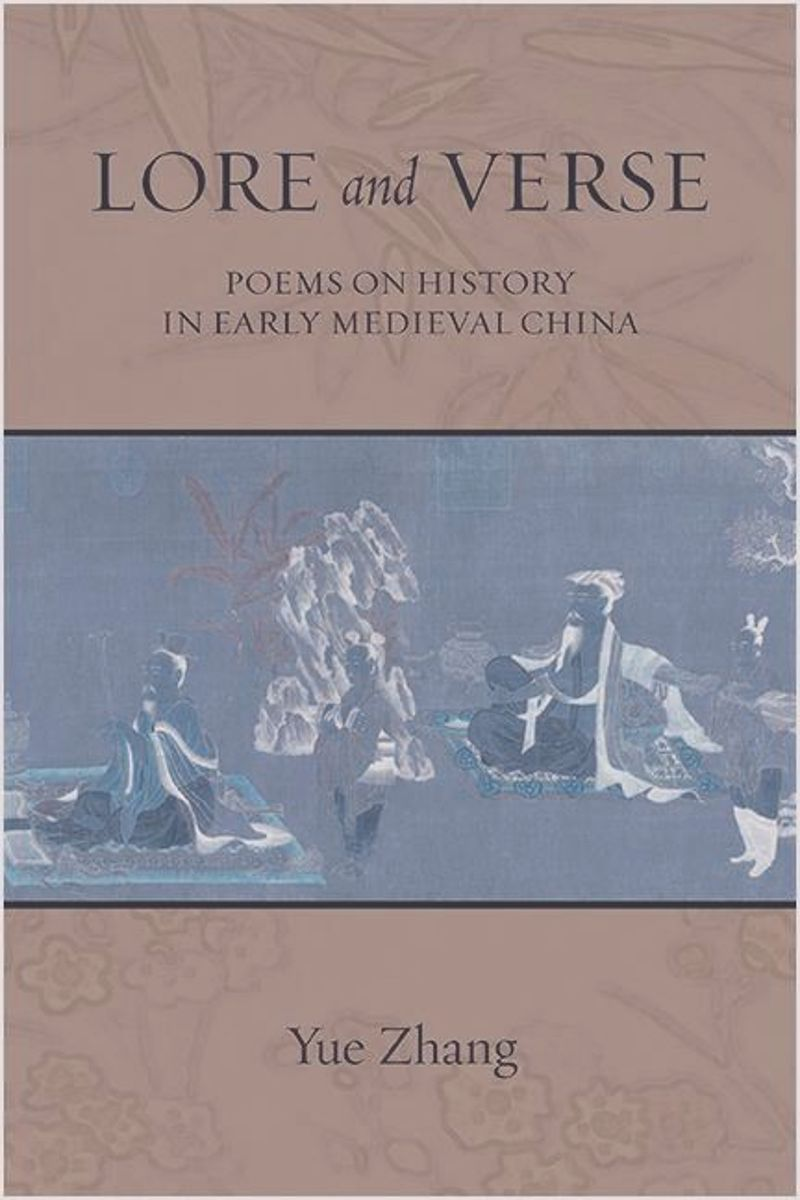
Lore and Verse is the first English-language book dedicated entirely to studying poems on history (yongshi shi) in premodern China. Focusing on works by poets from the entire range of early medieval China (220–589), Yue Zhang explores how history was disseminated and interpreted through poetry, as well as how and why certain historical figures were commemorated in poetry. In writing poems on history, poets retrospectively crafted their own identities through their celebration of historical figures, and they prospectively fortified a continuous lineage for transmitting their values and reputation to future generations. This continuous tradition of cultural memory informs a poet’s reception of historical figures, which in turn shapes that tradition through further intertextual connections. Lore and Verse questions the sweeping generalization of early medieval Chinese poetry as consisting mainly of exuberant images and an ornamental style—an inaccurate characterization repeated by later historians and literary critics—and it provides translations, close readings, and analyses of selected poems on history that will be useful for students, instructors, and general readers interested in premodern Chinese literature and culture.
- Guo Yingde 郭英德 and Li Zhiyuan 李志遠, eds. Ming Qing xiqu xuba zuanjian 明清戲曲序跋纂箋 (Annotated Collection of Prefaces and Postscripts to Ming-Qing Dramatic Texts). 12 vols. Beijing: Renmin wenxue chubanshe, 2021. Reviewed by Mengxiao Wang
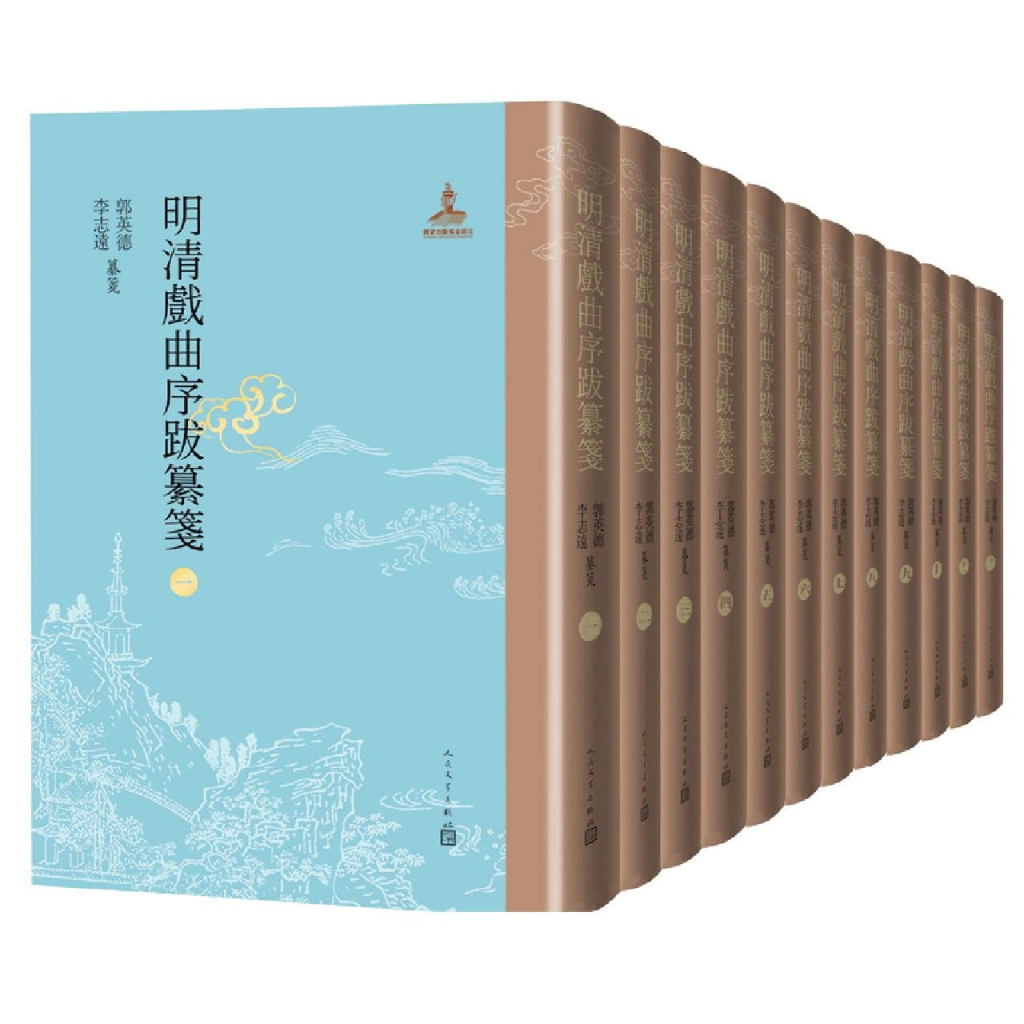
Compiled by Guo Yingde and Li Zhiyuan over ten years, Ming Qing xiqu xuba zuanjian provides the most comprehensive collection to date of xuba 序跋 (prefaces and postscripts) to Chinese dramatic texts. The editors conceive xuba in a broad sense: it not only refers to pieces with xu or ba in their titles but also encompasses all paratexts that “surround and comment on the main texts,” such as forewords (yin 引), general regulations (fanli 凡例), and principles for reading (dufa 讀法). While most of the xuba in this collection were written in the Ming-Qing period, the editors have also chosen to include materials from the Yuan dynasty and the Republican era to present a fuller picture.
In fourteen juan 卷 (twelve ce 册), this work is divided into five parts, including individual playscripts (xiqu juben 戲曲劇本), anthologies of dramas (xiqu xuanji 戲曲選集), treatises on dramas and catalogs of dramas (quhua qumu 曲話曲目), musical scores and rhyme schemes (qupu quyun 曲譜曲韻), and finally, zhugongdiao songs and anthologies of dispersed songs (zhugongdiao yu sanqu ji 諸宮調與散曲集). The playscripts in the first part cover nearly all the subgenres in premodern Chinese drama: xiwen 戲文 (southern plays), zaju 雜劇 (variety plays), chuanqi 傳奇 (full-length plays), and difangxi 地方戲 (local operas). At the end are two indexes of text titles and authors’ names, which help readers quickly locate items relevant to their research.
- Jack Chen. Anecdote, Network, Gossip, Performance: Essays on the “Shishuo xinyu.” Cambridge, MA: Harvard University Asia Center, 2021. Reviewed by Yue Zhang and Yi Jiang
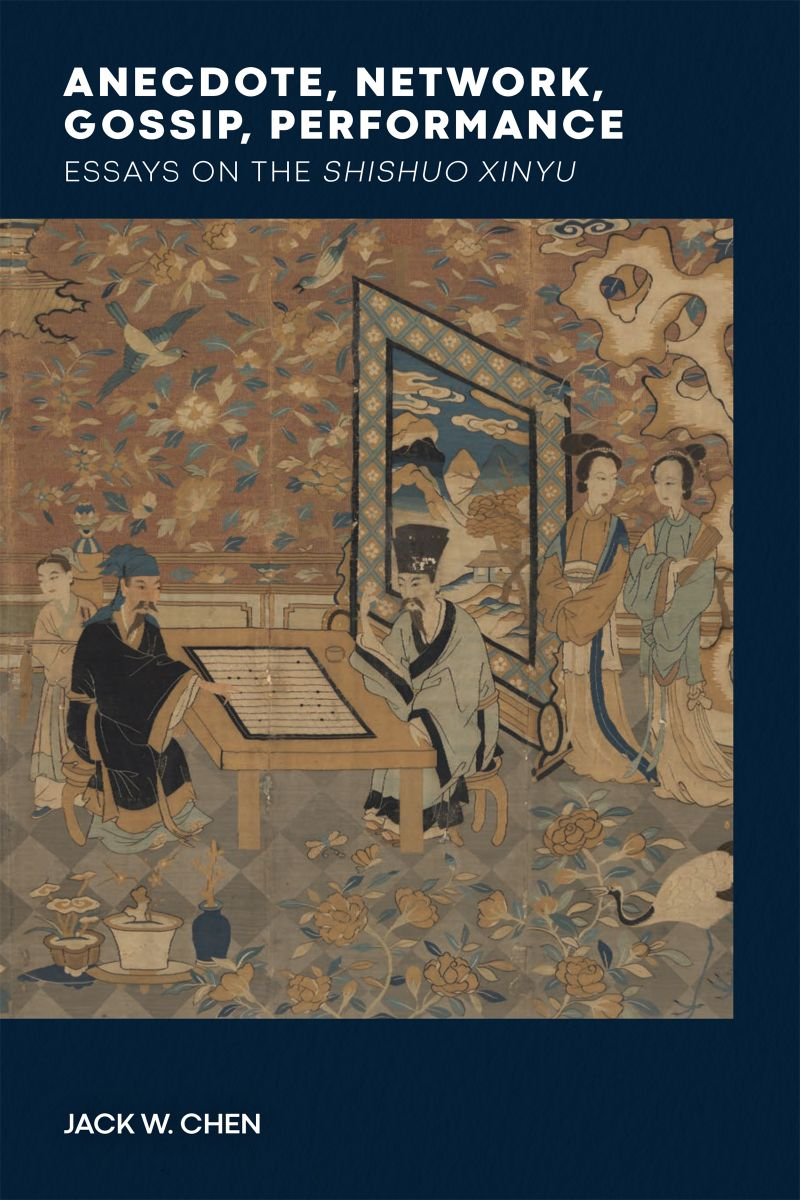
Anecdote, Network, Gossip, Performance is a study of the Shishuo xinyu, the most important anecdotal collection of medieval China—and arguably of the entire traditional era. In a set of interconnected essays, Jack W. Chen offers new readings of the Shishuo xinyu that draw upon social network analysis, performance studies, theories of ritual and mourning, and concepts of gossip and reputation to illuminate how the anecdotes of the collection imagine and represent a political and cultural elite. Whereas most accounts of the Shishuo have taken a historical approach, Chen argues that the work should be understood in literary terms.
At its center, Anecdote, Network, Gossip, Performance is an extended meditation on the very nature of the anecdote form, both what the anecdote affords in terms of representing a social community and how it provides a space for the rehearsal of certain longstanding philosophical and cultural arguments. Although each of the chapters may be read separately as an essay in its own right, when taken together, they present a comprehensive account of the Shishuo in all of its literary complexity.
Volume 9 • Issue 2 • November 2022
- Peter Francis Kornicki. Languages, Scripts, and Chinese Texts in East Asia. Oxford: Oxford University Press, 2018. Reviewed by Minghui Hu
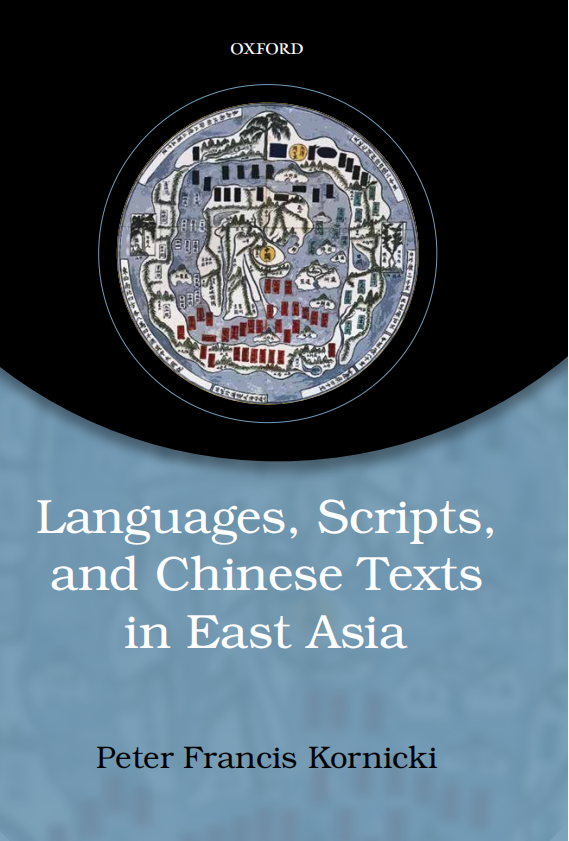
Languages, Scripts, and Chinese Texts in East Asia is a wide-ranging study of vernacularization in East Asia—not only China, Japan, Korea, and Vietnam, but also societies that no longer exist, such as the Tangut and Khitan empires. Peter Kornicki takes the reader from the early centuries of the common era, when the Chinese script was the only form of writing and Chinese Buddhist, Confucian, and medical texts spread throughout East Asia, through the centuries when vernacular scripts evolved, right up to the end of the nineteenth century when nationalism created new roles for vernacular languages and vernacular scripts. Through an examination of oral approaches to Chinese texts, it shows how highly-valued Chinese texts came to be read through the prism of the vernaculars and ultimately to be translated. This long process has some parallels with vernacularization in Europe, but a crucial difference is that literary Chinese was, unlike Latin, not a spoken language. As a consequence, people who spoke different East Asian vernaculars had no means of communicating in speech, but they could communicate silently by means of written conversation in literary Chinese; a further consequence is that within each society Chinese texts assumed vernacular garb: in classes and lectures, Chinese texts were read and declaimed in the vernaculars. What happened in the nineteenth century and why are there still so many different scripts in East Asia? How and why were Chinese texts dethroned, and what replaced them? These are some of the questions addressed in Languages, Scripts, and Chinese Texts in East Asia.
- Suyoung Son. Writing for Print: Publishing and the Making of Textual Authority in Late Imperial China. Cambridge, MA: Harvard University Asia Center, 2018. Reviewed by Ling Hon Lam
This book examines the widespread practice of self-publishing by writers in late imperial China, focusing on the relationships between manuscript tradition and print convention, peer patronage and popular fame, and gift exchange and commercial transactions in textual production and circulation.
Combining approaches from various disciplines, such as history of the book, literary criticism, and bibliographical and textual studies, Suyoung Son reconstructs the publishing practices of two seventeenth-century literati-cum-publishers, Zhang Chao in Yangzhou and Wang Zhuo in Hangzhou, and explores the ramifications of these practices on eighteenth-century censorship campaigns in Qing China and Chosŏn Korea. By giving due weight to the writers as active agents in increasing the influence of print, this book underscores the contingent nature of print’s effect and its role in establishing the textual authority that the literati community, commercial book market, and imperial authorities competed to claim in late imperial China.
- Li Ling. The Chu Silk Manuscripts from Zidanku, Changsha (Hunan Province). Volume 1: Discovery and Transmission. Translated and edited by Lothar von Falkenhausen. Hong Kong: Chinese University of Hong Kong, 2020. Review by Michael Nylan
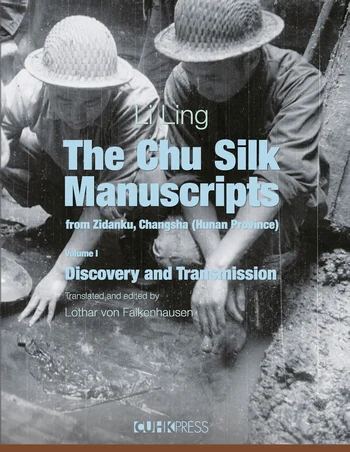
The Silk Manuscripts from Zidanku, Changsha (Hunan) are the only pre-imperial Chinese manuscripts on silk found to date. Dating to the turn from the fourth to the third centuries BC (Late Warring States period), they contain several short texts concerning basic cosmological concepts in a diagrammatic arrangement and surrounded by pictorial illustrations. As such, they constitute a unique source of information complementing and going beyond what is known from transmitted texts.
This is the first in a two-volume monograph on the Zidanku manuscripts, reflecting almost four decades of research by Professor Li Ling of Peking University. While the philological study and translation of the manuscript texts is the subject of Volume II, this first volume presents the archaeological context and history of transmission of the physical manuscripts. It records how they were taken from their original place of interment in the 1940s and taken to the United States in 1946; documents the early stages in the research on the finds from the Zidanku tomb and its reexcavation in the 1970s; and accounts for where the manuscripts were kept before becoming the property, respectively, of the Arthur M. Sackler Foundation, New York (Manuscript 1), and the Freer and Sackler Galleries, Smithsonian Institution (Manuscripts 2 and 3). Superseding previous efforts, this is the definitive account that will set the record straight and establish a new basis for future research on these uniquely important artifacts.
- Jiushan Shuhui. Top Graduate Zhang Xie: The Earliest Extant Chinese Southern Play. Translated and introduced by Regina S. Liamas. New York:Columbia University Press, 2021. Reviewed by Ying Wang
Top Graduate Zhang Xie is the first extant play in the Chinese southern dramatic tradition and a milestone in the history of Chinese literature. Dating from the early fifteenth century, but possibly composed earlier, it is the work of a writing club called the Nine Mountain Society.
The play relates the story of a talented scholar who sets off for the capital to take the imperial exams. On the road, he is robbed and beaten by a bandit. In a nearby village temple he meets an orphaned girl who nurses him back to health and whom he marries. Once he takes first place in the exams, however, he comes to regret the marriage, setting in motion a series of decisions with dire consequences. Underlying the drama are preposterous farce, a penchant for puns, and ingenious play on the conventions of theater.
This story of love, ambition, and betrayal speaks to the tensions created by the expectations that family, society, and state placed on the scholar. The examination system offered families the promise of social and economic advancement through an official position. The state relied on these men for the administration of the empire, and society expected that education in the classics would produce moral men. The play offers a critique of the scholar’s ideal, the education system, and the ethical values this process was intended to instill.
This first full English-language translation of Top Graduate Zhang Xie features a detailed introduction that discusses the foundations of Chinese drama and the play’s composition and performance.
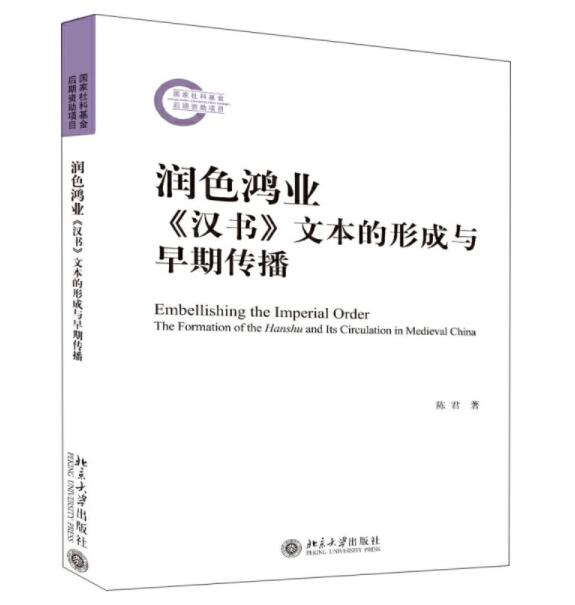
- Chen Jun 陳君. Runse hongye: Hanshu wenben de xingcheng yu zaoqi chuanbo 潤色鴻業:漢書文本的形成與早期傳播 (Embellishing the Imperial Order: The Formation of the Hanshu and Its Circulation in Medieval China). Beijing: Peking University Press, 2020. Reviewed by Xu Jianwei
- Zhang Yue 張月 and Chen Yinchi 陳引馳. Zhonggu wenxue zhong de shi yu shi 中古文學中的詩與史 (The Interrelation of Poetry and History in Medieval Literature). Shanghai: Fudan daxue chubanshe, 2020. Reviewed by Issac Yue
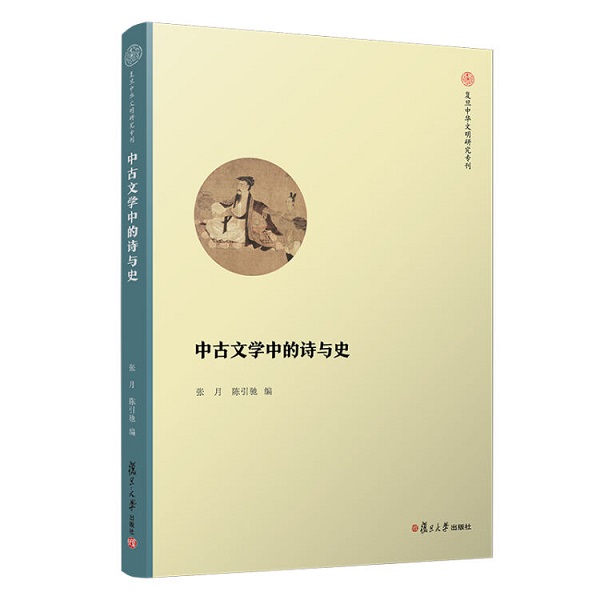
The Interrelation of Poetry and History in Medieval Chinese Literature 中古文學中的詩與史, was published by Fudan University Press in 2020. The first book of its kind, it examines various issues on poetic representation and competence in historical narrative and documents. It investigates the dynamic relationship between poetry and history in Chinese literature: for example, how historical lore is disseminated via poetry and the competence of poetic representation in historical documents, shaping Chinese literati’s cultural identity.
- Xiaoshan Yang. Wang Anshi and Song Poetic Culture. Cambridge, MA: Harvard University Asia Center, 2021. Reviewed by Yue Zhang
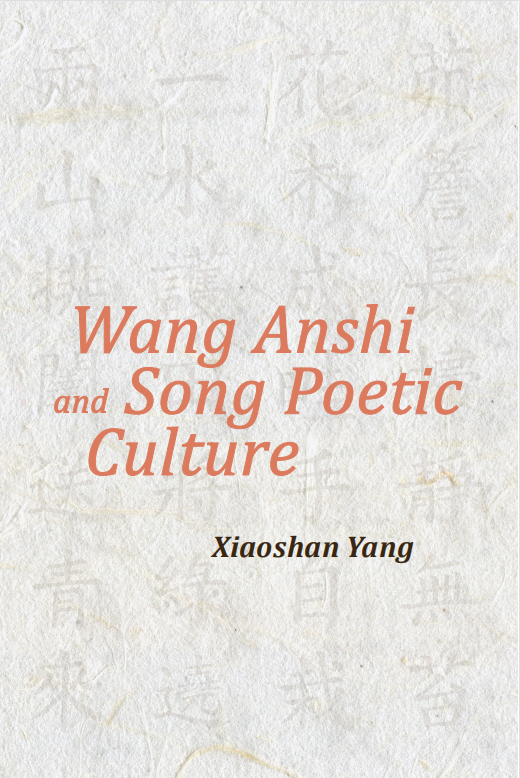
A poetic culture consists of a body of shared values and conventions that shape the composition and interpretation of poetry in a given historical period. This book on Wang Anshi (1021–1086) and Song poetic culture—the first of its kind in any Western language—brings into focus a cluster of issues that are central to the understanding of both the poet and his cultural milieu. These issues include the motivations and consequences of poetic contrarianism and the pursuit of novelty, the relationship between anthology compilation and canon formation, the entanglement of poetry with partisan politics, Buddhist orientations in poetic language, and the development of the notion of late style.
Though diverse in nature and scope, the issues all bear the stamp of the period as well as Wang Anshi’s distinct personality. Conceived of largely as a series of case studies, the book’s individual chapters may be read independently of each other, but together they form a varied, if only partial, mosaic of Wang Anshi’s work and its critical reception in the larger context of Song poetic culture.
Volume 8 • Issue 2 • November 2021
- Li Yu. A Couple of Soles: A Comic Play from Seventeenth-Century China. Translated by Jing Shen and Robert E. Hegel. New York: Columbia University Press, 2019. Reviewed by Ying Wang
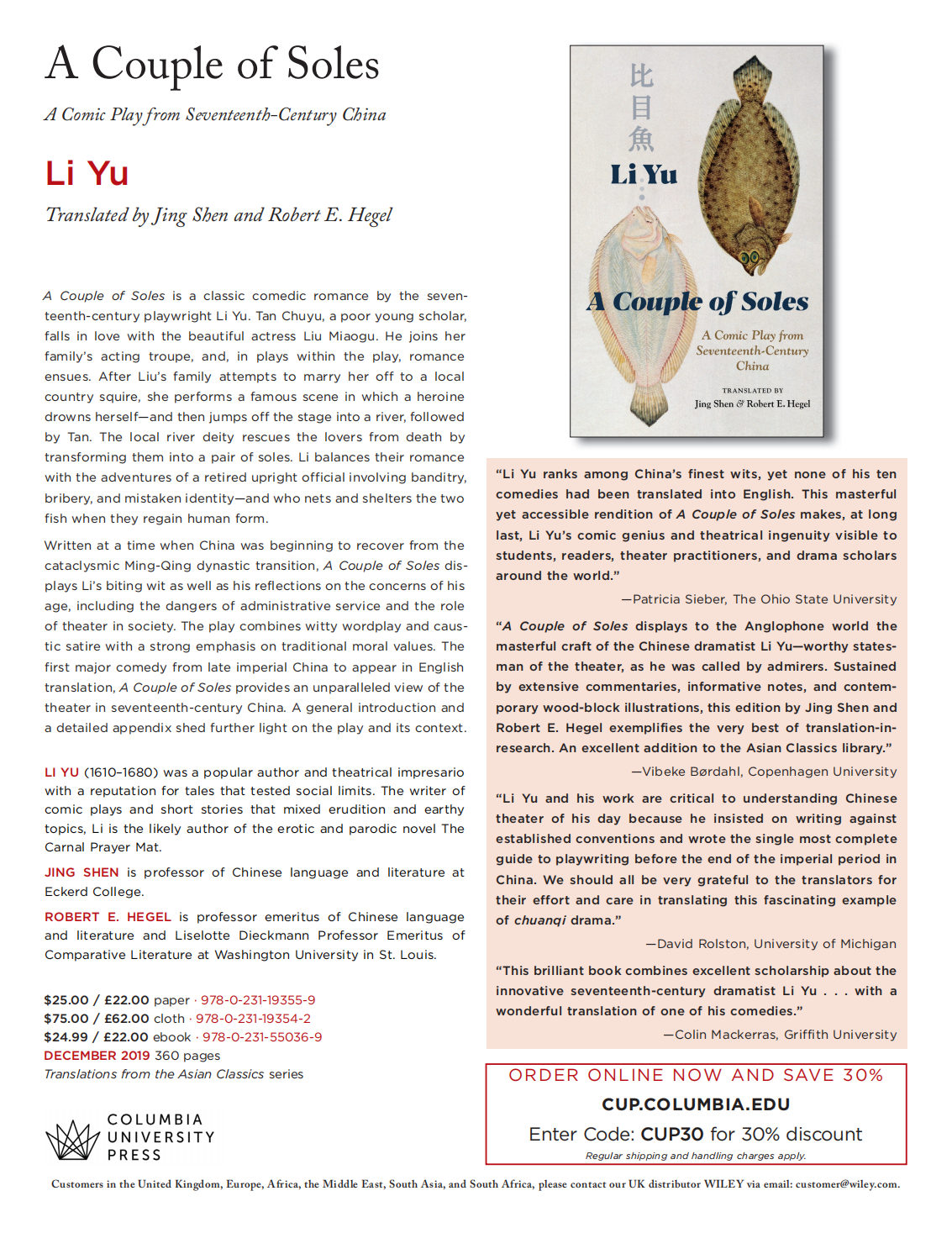
This is a poster that Columbia University Press made up for the translation. Click the image for details.
- Wendy Swartz. Reading Philosophy, Writing Poetry: Intertextual Modes of Making Meaning in Early Medieval China. Cambridge, MA: Harvard University Asia Center, 2018. Reviewed by Yue Zhang
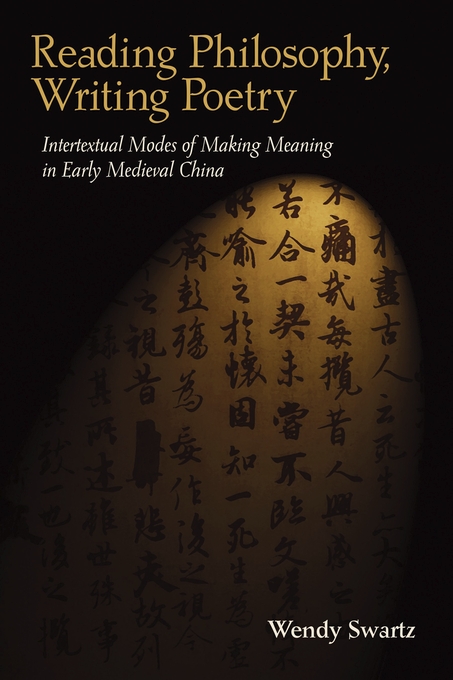
In a formative period of Chinese culture, early medieval writers made extensive use of a diverse set of resources, in which such major philosophical classics as Laozi, Zhuangzi, and Classic of Changes featured prominently. Reading Philosophy, Writing Poetry examines how these writers understood and manipulated a shared intellectual lexicon to produce meaning. Focusing on works by some of the most important and innovative poets of the period, this book explores intertextuality―the transference, adaptation, or rewriting of signs―as a mode of reading and a condition of writing. It illuminates how a text can be seen in its full range of signifying potential within the early medieval constellation of textual connections and cultural signs.
If culture is that which connects its members past, present, and future, then the past becomes an inherited and continually replenished repository of cultural patterns and signs with which the literati maintains an organic and constantly negotiated relationship of give and take. Wendy Swartz explores how early medieval writers in China developed a distinctive mosaic of ways to participate in their cultural heritage by weaving textual strands from a shared and expanding store of literary resources into new patterns and configurations.
- Xiaofei Tian. The Halberd at Red Cliff: Jian’an and the Three Kingdoms. Cambridge, MA: Harvard University Asia Center, 2018. Reviewed by Yue Zhang
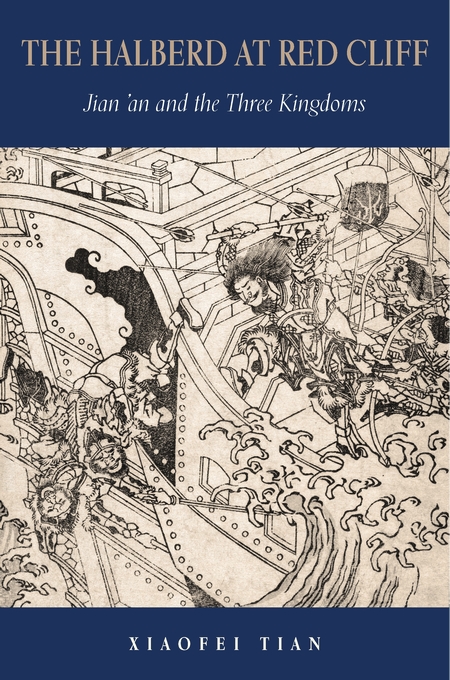
The turn of the third century CE—known as the Jian’an era or Three Kingdoms period—holds double significance for the Chinese cultural tradition. Its writings laid the foundation of classical poetry and literary criticism. Its historical personages and events have also inspired works of poetry, fiction, drama, film, and art throughout Chinese history, including Internet fantasy literature today. There is a vast body of secondary literature on these two subjects individually, but very little on their interface.
The image of the Jian’an era, with its feasting, drinking, heroism, and literary panache, as well as intense male friendship, was to return time and again in the romanticized narrative of the Three Kingdoms. How did Jian’an bifurcate into two distinct nostalgias, one of which was the first paradigmatic embodiment of wen (literary graces, cultural patterning), and the other of wu (heroic martial virtue)? How did these largely segregated nostalgias negotiate with one another? And how is the predominantly male world of the Three Kingdoms appropriated by young women in contemporary China? The Halberd at Red Cliff investigates how these associations were closely related in their complex origins and then came to be divergent in their later metamorphoses.
Volume 7 • Issue 2 • November 2020
- Shen Zongqian. Esquif sur l´océan de la peinture 芥舟學畫編. Translated and annotated by Yolaine Escande. Paris: Les Belles Lettres, 2019. Reviewed by Antonio Mezcua López
Shen Zongqian’s Skiff on the Ocean’s Pictorial Apprenticeship (1781) is meant to be a pictorial treatise intended for practitioners and connoisseurs. Nonetheless, the book makes Chinese painting accessible to everyone. This is probably the main reason of its success with 20th-century and contemporary Chinese artists and theoreticians.
Halfway between the Manual of the Mustard Seed Garden and Shitao’s Monk Bitter-Pumpkin’s Reflections on Painting, Shen Zongqian’s text is strikingly both practical and concrete, articulated with an extensive theoretical reasoning. The first two chapters concern mountains and waters painting (shanshui), i.e. the pictorial and literary landscape. The third chapter is dedicated to the “spirit transmission”, in other words the portrait, whilst chapter four conceives figure painting as the union of shanshui and portrait.
The volume, referring to its famous predecessors, develops and clearly and concretely casts light on a great number of technical, philosophical and aesthetic notions used in calligraphy and painting. Being an offshoot of “orthodoxy”, the book anyhow challenges it by pointing out its contradictions and proposing solutions.
Until now unpublished in Western languages, this treatise is a valuable testimony of the social, historical, aesthetic, and ideological status and role of literati painting during the 18th century. It helps comprehend the reasons of the exploitation of literati painting by the imperial system by means of orthodoxy, and its function of legitimisation.
- Zong-Qi Cai, ed. How to Read Chinese Poetry in Context: Poetic Culture from Antiquity Through the Tang. New York: Columbia University Press, 2018. Reviewed by Christopher M. B. Nugent
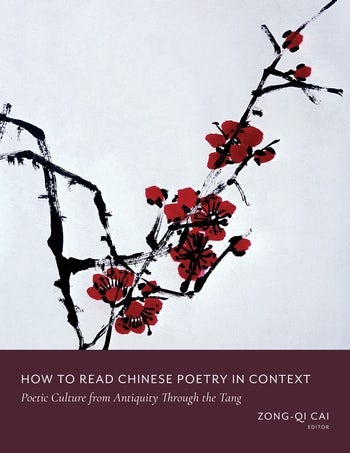
How to Read Chinese Poetry in Context is an introduction to the golden age of Chinese poetry, spanning the earliest times through the Tang dynasty (618–907). It aims to break down barriers—between language and culture, poetry and history—that have stood in the way of teaching and learning Chinese poetry. Not only a primer in early Chinese poetry, the volume demonstrates the unique and central role of poetry in the making of Chinese culture.
Each chapter focuses on a specific theme to show the interplay between poetry and the world. Readers discover the key role that poetry played in Chinese diplomacy, court politics, empire building, and institutionalized learning; as well as how poems shed light on gender and women’s status, war and knight-errantry, Daoist and Buddhist traditions, and more. The chapters also show how people of different social classes used poetry as a means of gaining entry into officialdom, creating self-identity, fostering friendship, and airing grievances. The volume includes historical vignettes and anecdotes that contextualize individual poems, investigating how some featured texts subvert and challenge the grand narratives of Chinese history. Presenting poems in Chinese along with English translations and commentary, How to Read Chinese Poetry in Context unites teaching poetry with the social circumstances surrounding its creation, making it a pioneering and versatile text for the study of Chinese language, literature, history, and culture.
- I-Hsien Wu. Eroticism and Other Literary Conventions in Chinese Literature: Intertextuality in The Story of the Stone. Amherst, NY: Cambria Press, 2017. Reviewed by Mary Scott

Using Julia Kristeva’s terms on intertextuality, especially her notions that every human being is nothing more than an intersection of preexistent discourses created by human language and text, and that reality can only be seized as a reconstructed fiction that exists through its relation to previous fiction, Eroticism and Other Literary Conventions in Chinese Literature examines how The Story of the Stone dramatizes human experiences by responding to previous literature.
In this light, the mythic stone’s harsh critiques of historical romance (yeshi), erotic fiction (fengyue bimo), and scholar-and-beauty fiction (caizi jiaren) all allude to the nature of intertextuality and signify The Stone’s anxiety of influence: the novel’s construction of lust shows its indebtedness to erotic literature; its making of romance is created through the use of drama as reading and as performance; in the protagonist’s confrontation with and final submission to social expectations, the novel wrestles with the portrayal of young literati in the scholar-and-beauty convention; and finally, following a genealogy of objects featured in literature to animate human lives, the mythic stone is created to question the convention of storytelling, not only in pre-existing fiction but also in the novel’s many previous lives in manuscript versions and printed editions.
- Zuo Tradition. Zuozhuan 左傳: Commentary on the “Spring and Autumn Annals.” Translated and introduced by Stephen Durrant, Wai-yee Li, and David Schaberg. 3 vols. Seattle: University of Washington Press, 2016. Reviewed by Kai Vogelsang
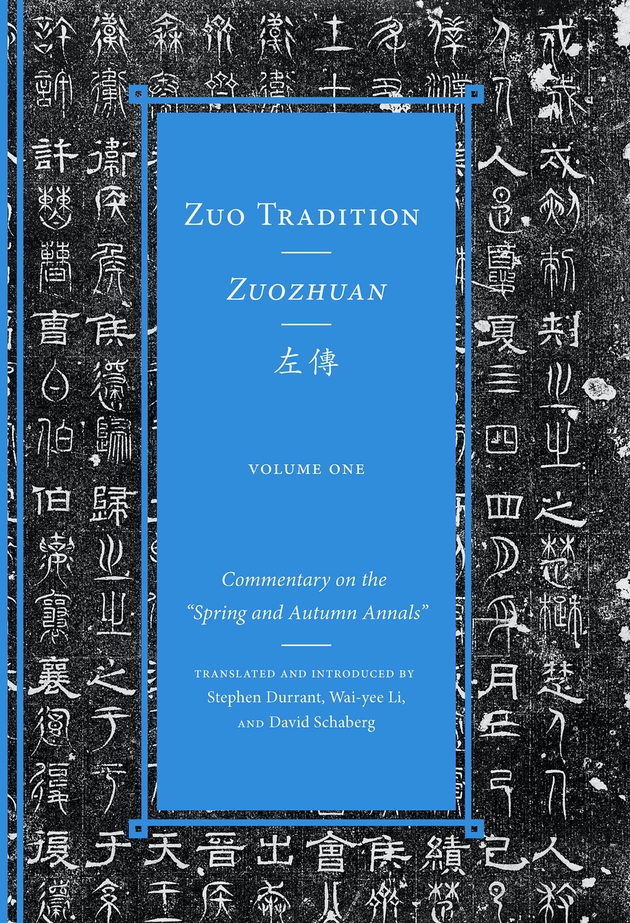
Whether considered as a work of history or literature, Zuo Tradition is surely one of the masterpieces of world literature, and the translators and publisher are to be applauded for making it more accessible to readers everywhere in this handsome and readable new complete translation. The translation is crisp and lively, the introduction straightforward and informative, and the notes and indexes invariably helpful. In every respect, Zuo Tradition is a realization of Confucius’s maxim ‘Use words that are adequate to the intent; use ornamentation that is adequate to the words.’
– Edward Louis Shaughnessy, University of Chicago
Zuozhuan has anchored the entire corpus of Chinese historical writing for the last two millennia. Its canonical status as the work of Confucius has given it enormous authority not just in determining how Chinese historians should record past events, but in shaping how the Chinese imagine that history itself unfolds. Now that we have this meticulously researched and carefully considered translation, this foundational text can finally take its place among the core classics of early historical writing worldwide.
– Timothy Brook, University of British Columbia
It would not be an exaggeration to say that with the publication of this new translation, Zuozhuan will become accessible to an incomparably larger audience, benefiting Western studies of ancient Chinese history, thought, and culture. . . . This translation will establish new professional standards for future translations in the field.
– Yuri Pines, author of Foundations of Confucian Thought: Intellectual Life in the Chunqiu Period
Volume 6 • Issue 2 • November 2019
- Zhang Yingyu. The Book of Swindles: Selections from a Late Ming Collection. Translated by Christopher Rea and Bruce Rusk. New York: Columbia University Press, 2017. Reviewed by Katherine Carlitz

This is an age of deception. Con men ply the roadways. Bogus alchemists pretend to turn one piece of silver into three. Devious nuns entice young women into adultery. Sorcerers use charmed talismans for mind control and murder. A pair of dubious monks extorts money from a powerful official and then spends it on whoring. A rich student tries to bribe the chief examiner, only to hand his money to an imposter. A eunuch kidnaps boys and consumes their “essence” in an attempt to regrow his penis. These are just a few of the entertaining and surprising tales to be found in this seventeenth-century work, said to be the earliest Chinese collection of swindle stories.
The Book of Swindles, compiled by an obscure writer from southern China, presents a fascinating tableau of criminal ingenuity. The flourishing economy of the late Ming period created overnight fortunes for merchants—and gave rise to a host of smooth operators, charlatans, forgers, and imposters seeking to siphon off some of the new wealth. The Book of Swindles, which was ostensibly written as a manual for self-protection in this shifting and unstable world, also offers an expert guide to the art of deception. Each story comes with commentary by the author, Zhang Yingyu, who expounds a moral lesson while also speaking as a connoisseur of the swindle. This volume, which contains annotated translations of just over half of the eighty-odd stories in Zhang’s original collection, provides a wealth of detail on social life during the late Ming and offers words of warning for a world in peril.
- Rebecca Doran.Transgressive Typologies: Construction of Gender and Power in Early Tang China. Cambridge,MA: Harvard University Asia Center, 2016. Reviewed by Maram Epstein

The exceptionally powerful Chinese women leaders of the late seventh and early eighth centuries – including Wu Zhao, the Taiping and Anle Princesses, Empress Wei, and Shangguan Wan’er – though quite famous in the Chinese tradition, remain elusive and often misunderstood or essentialized throughout history. Transgressive Typologies utilizes a new, multidisciplinary approach to understand how these figures’ historical identities are constructed in the mainstream secular literary-historical tradition and to analyze the points of view that inform these constructions.
Utilizing close readings and rereadings of primary texts written in medieval China through later imperial times, the study elucidates narrative typologies and motifs associated with these women to explore how their power is rhetorically framed, gendered, and ultimately deemed transgressive. Rebecca Doran offers a new understanding of major female figures of the Tang era within their literary-historical contexts, and delves into critical questions about the relationship between Chinese historiography, reception-history, and the process of image-making and cultural construction.
- Joseph S. C. Lam, Shuen-fu Lin, Christian de Pee, and Martin Powers, eds. Senses of the City: Perceptions of Hangzhou and Southern Song China 1127-1279. Hong Kong: CUHK Press, 2017. Reviewed by Michael Fuller
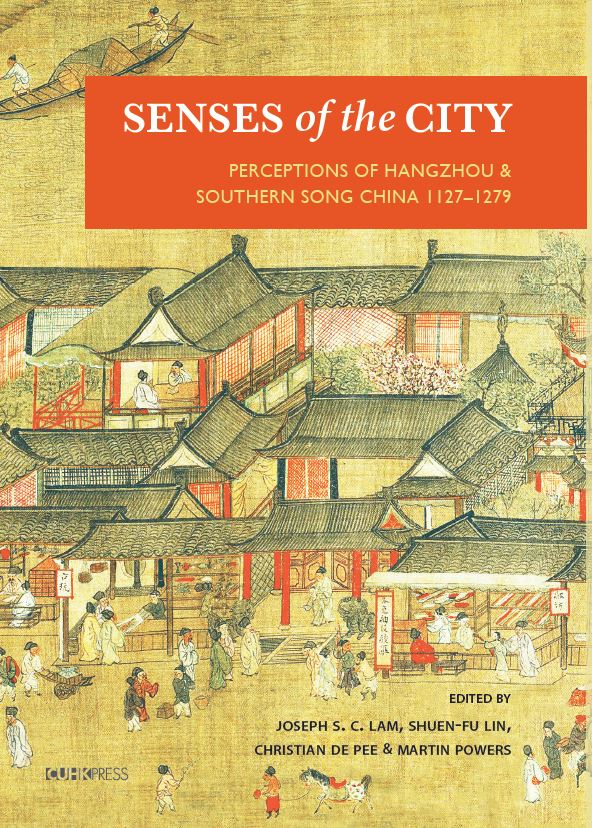
While previous scholars have focused on the structural properties of Song dynasty (960–1279) cities, contributors in this volume unite in an effort to restore the connection between the historical texts concerning Southern Song cities, mainly Lin’an, or Hangzhou, and the actual physical urban space described in those works. Their richly detailed essays reveal a world distinct from, yet at the same time related to, the rich urban and material cultures of Hangzhou. The sights, sounds, and even smells of the greatest city on earth in the twelfth and thirteenth centuries are at once palpable in the nine essays assembled here, all of which are penned by prominent scholars in the field. This book is highly recommended for all readers interested in the cities of ancient China. (James Hargett)
Never meant to be an imperial capital, Hangzhou always exceeded the category of a court city. Its chaotic energy seduced literati and painters who might have wanted to tame its excesses to turn away from the old models of imperial stasis and enter into the flux of change. The authors of this volume revisit important literary, artistic, and historical sources of the Song dynasty to capture this extraordinary transformation and offer new ways to appreciate the excitement and anxiety of living in this urban world. (Timothy Brook)
- Xiaorong Li.The Poetics and Politics of Sensuality in China: The “Fragrant and Bedazzling” Movement (1600-1930). New York: Cambria University Press, 2019. Reviewed by Paola Zamperini

“Fragrant and bedazzling” (xiangyan) is a Chinese phrase synonymous with sensual and bewitching feminine beauty and, in literature, eroticism. Drawing on extensive archival research, this book argues that sensual lyricism is more political than its sensuous surfaces—and China’s lyrical tradition is sexier and more “modern”—than existing histories have led us to believe.